10 Real Estate Photography Mistakes That Make Homes Look Cheap

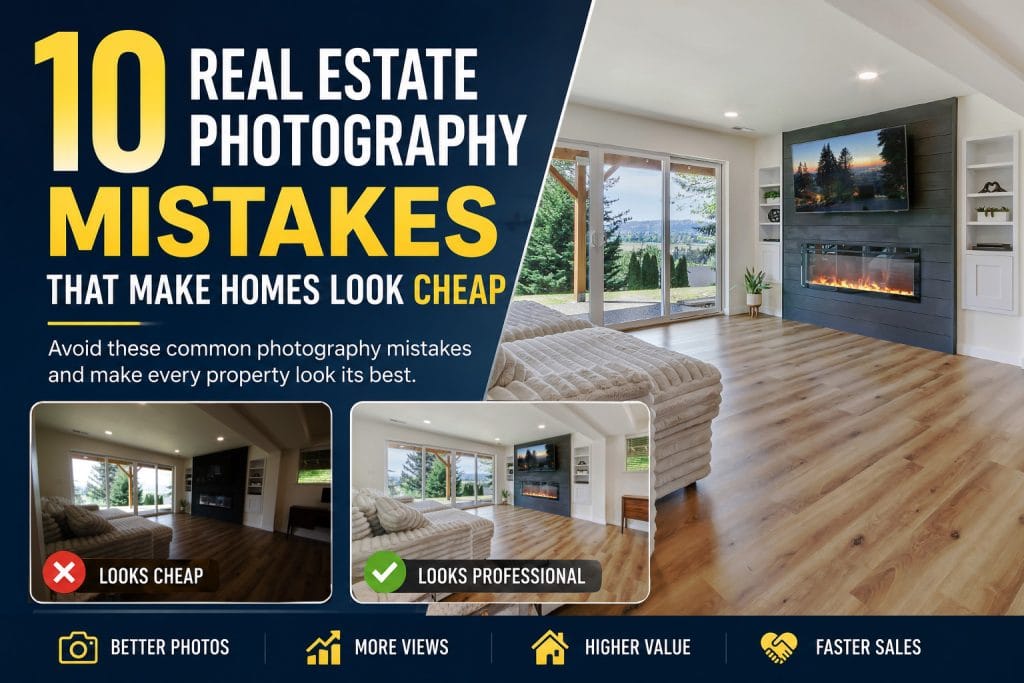
Real estate photography mistakes can instantly make even a beautiful property look cheap and unattractive. In today’s competitive market, high-quality listing photos are essential for attracting buyers and creating a strong first impression. Poor lighting, bad composition, overediting, and cluttered spaces can reduce the perceived value of a home and hurt sales potential.
Whether you are a real estate photographer, agent, or property owner, avoiding common photography mistakes is essential for creating professional-looking listings that attract buyers faster.
According to the National Association of Realtors, high-quality listing photos play a major role in attracting buyers.
1. Poor Lighting
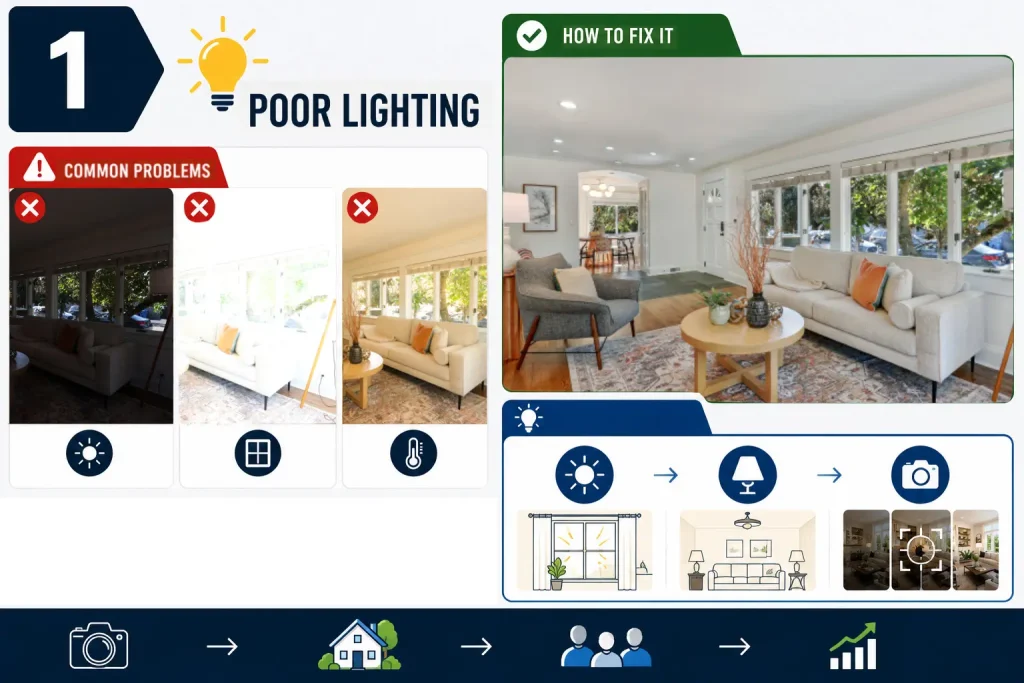
Lighting is one of the biggest factors in real estate photography. Dark rooms, heavy shadows, or uneven lighting can make a home feel small and gloomy.
Common Problems:
- Underexposed interiors
- Overly bright windows
- Yellow or mixed color lighting
How to Fix It:
Use natural light whenever possible and combine it with proper interior lighting. HDR blending or flambient editing helps balance indoor and outdoor exposure for a clean, natural result.
2. Crooked Vertical Lines
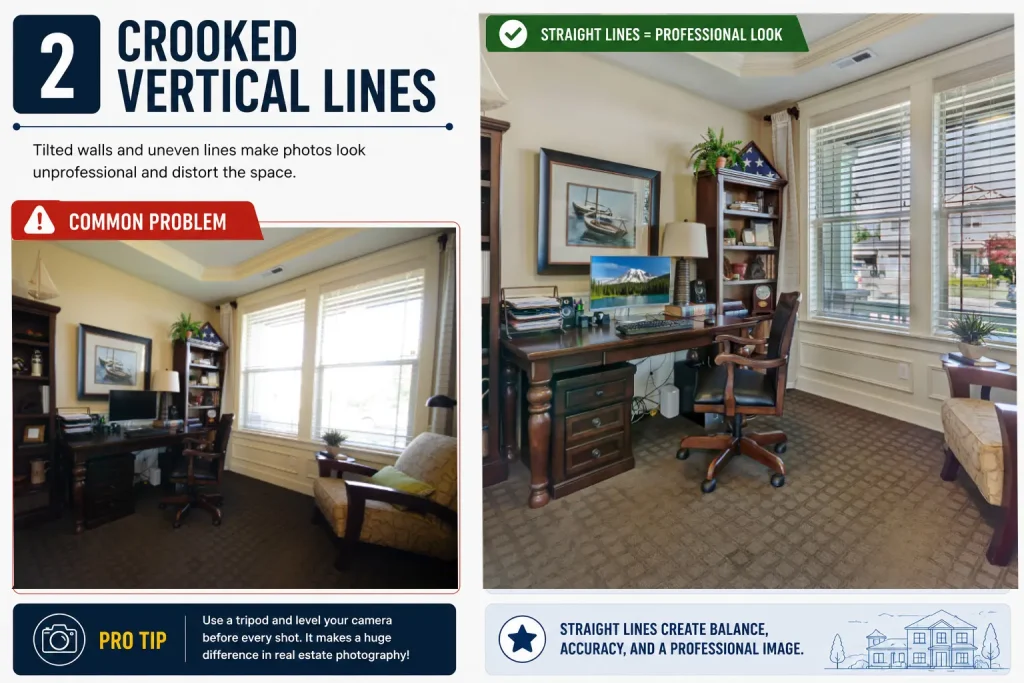
Tilted walls and leaning furniture instantly make photos look unprofessional. This usually happens when the camera is not level.
Why It Matters:
Crooked lines distort the room and create an uncomfortable viewing experience.
Solution:
Use a tripod and correct vertical lines during post-processing to achieve clean architectural alignment.
3. Overediting the Images
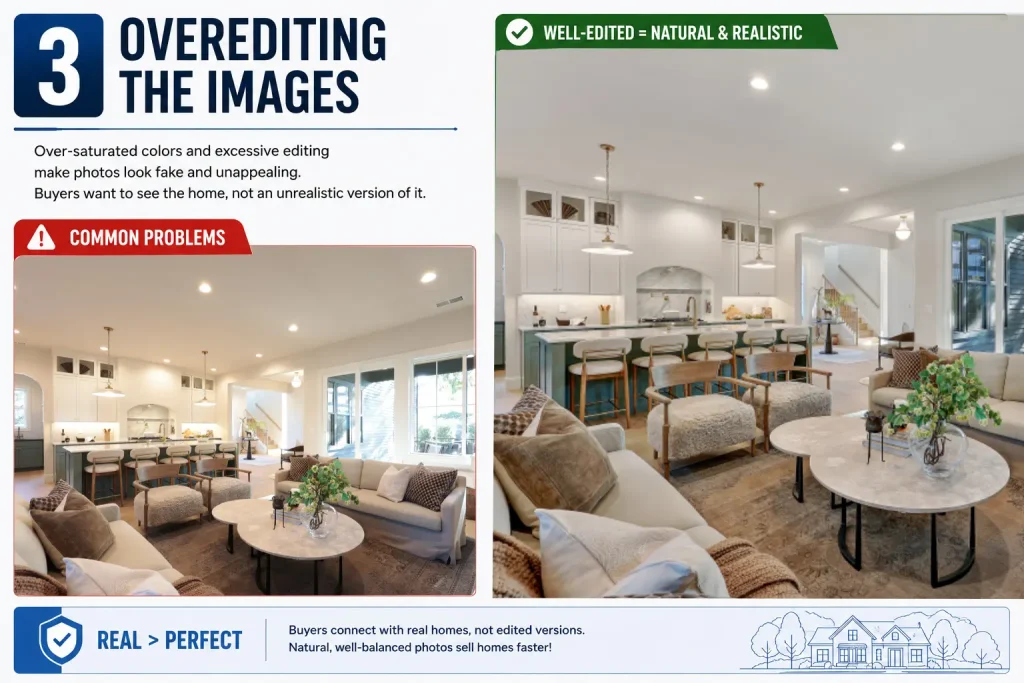
Many photographers oversaturate colors or over-sharpen images trying to make them “pop.” Unfortunately, this often creates fake-looking results.
Signs of Overediting:
- Neon green grass
- Unrealistic sky colors
- Extremely bright interiors
- Heavy sharpening halos
Best Practice:
Keep edits natural and realistic. Buyers want to see the actual property, not an artificial version of it.
4. Cluttered Spaces
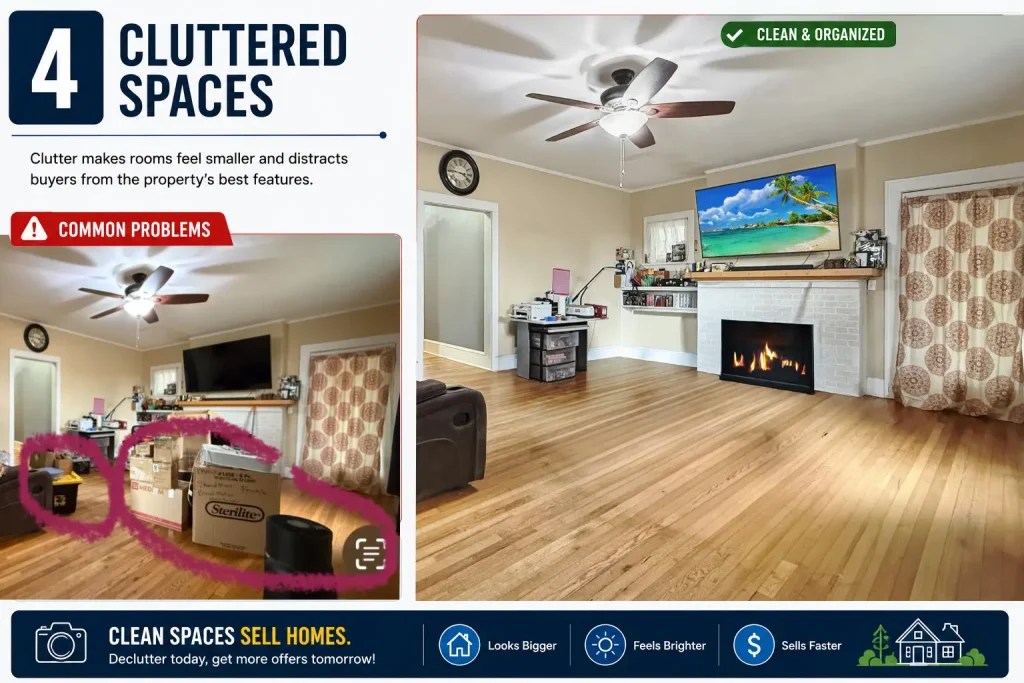
Even the best photography cannot save a messy room. Visible clutter makes homes appear smaller and less valuable.
Common Clutter Issues:
- Wires and chargers
- Trash bins
- Personal items
- Excess furniture
Solution:
Declutter before the shoot and remove distracting items during photo editing if necessary.
5. Incorrect White Balance
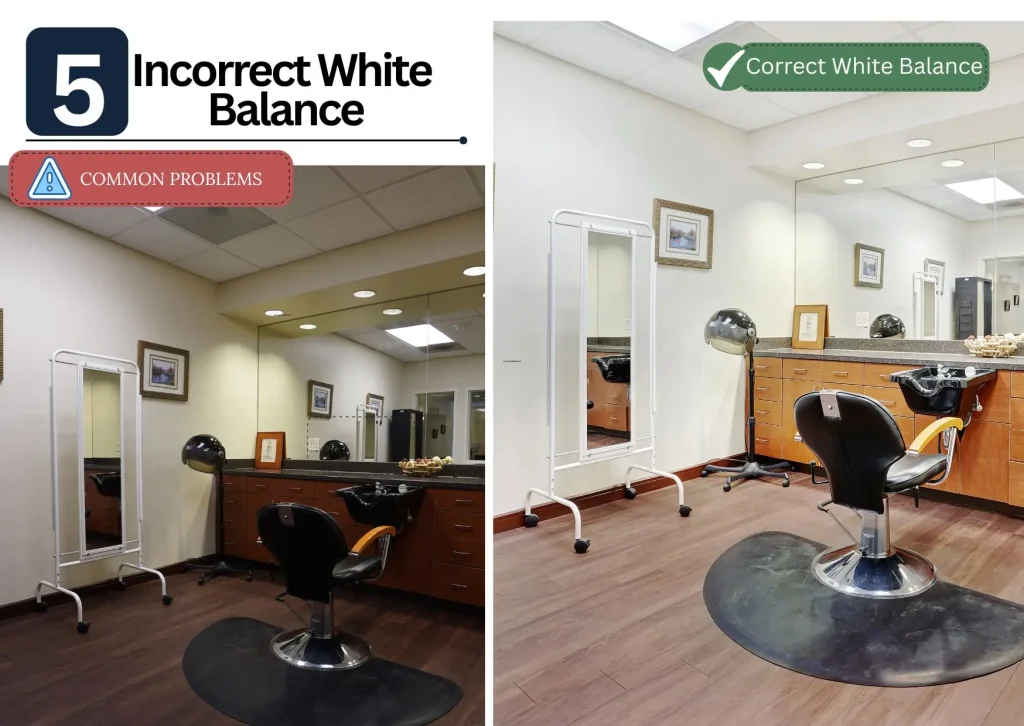
Color temperature problems can make walls appear yellow, blue, or green. This gives the property an outdated and unattractive appearance.
Fix:
Adjust white balance properly during shooting and editing to maintain natural interior colors.
6. Using Wide Angles Incorrectly
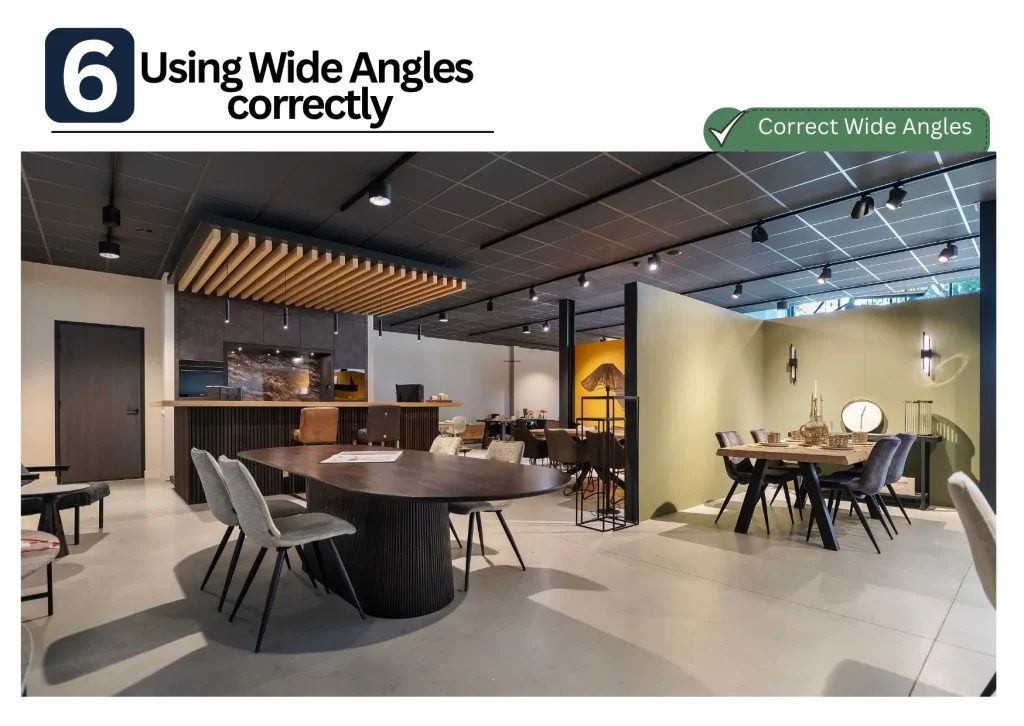
Wide-angle lenses are essential in real estate photography but overusing them can create unrealistic room sizes.
Problem:
Rooms may look distorted or misleading.
Better Approach:
Use wide angles carefully while maintaining accurate proportions and natural perspectives.
7. Ignoring Window Views
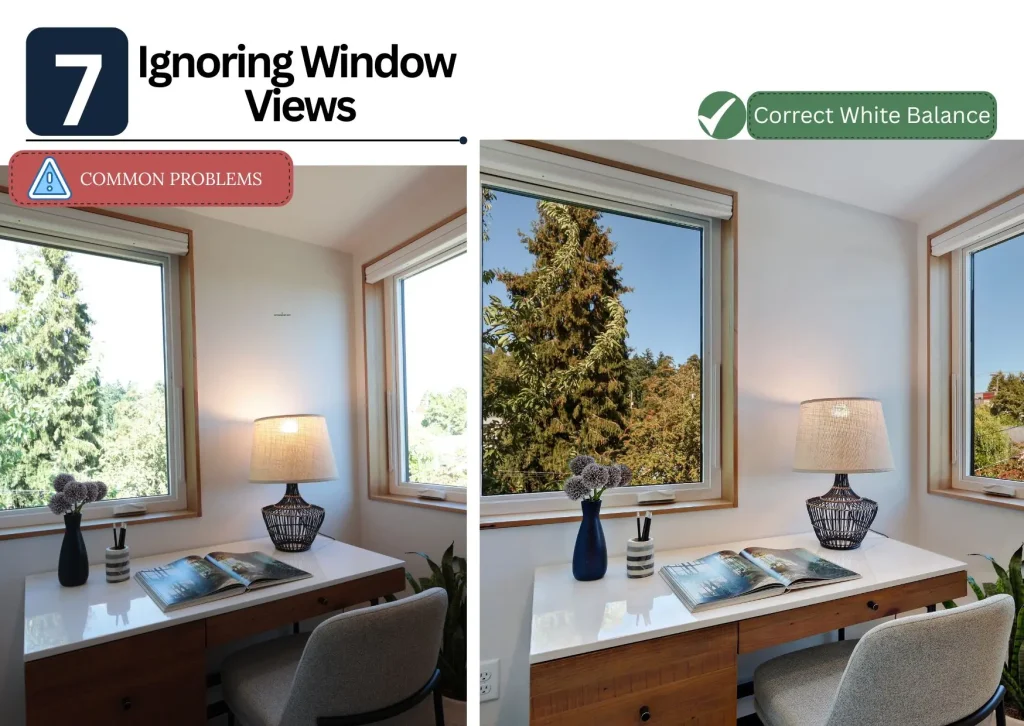
Blown-out windows remove an important selling feature of the home. Buyers want to see outdoor views, landscaping, pools, or cityscapes.
Solution:
Use exposure blending or window masking techniques to preserve outdoor details naturally.
8. Bad Composition
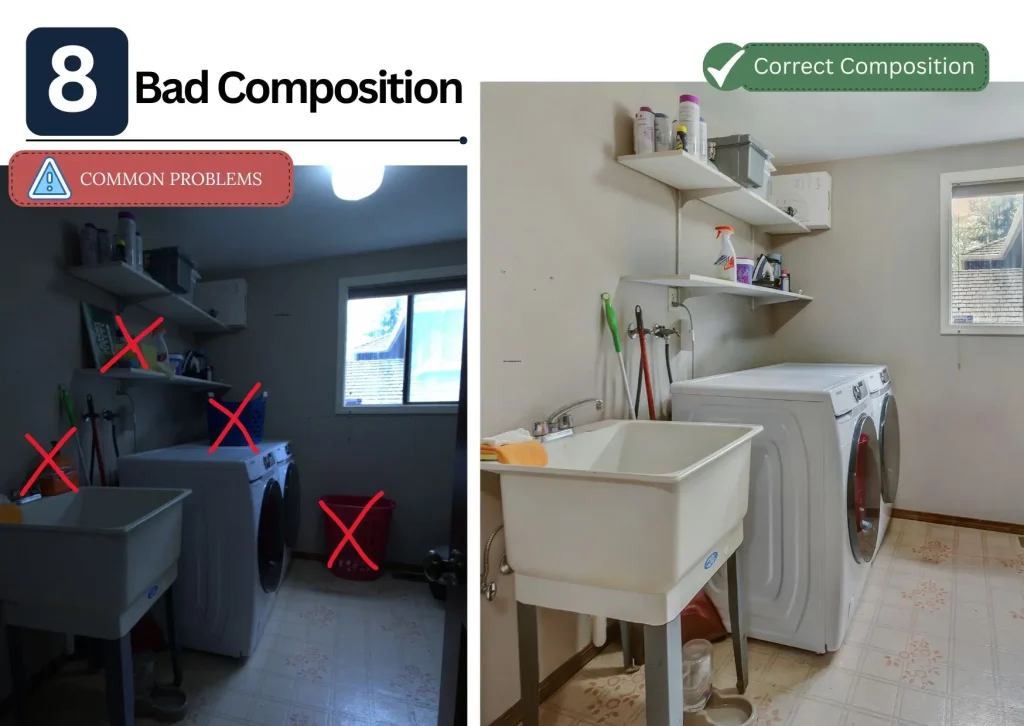
Poor framing can make rooms feel awkward and unbalanced.
Examples:
- Cutting off furniture
- Shooting from incorrect heights
- Uneven spacing
Tip:
Shoot at chest height and compose images carefully to showcase space and flow.
9. Not Editing the Sky
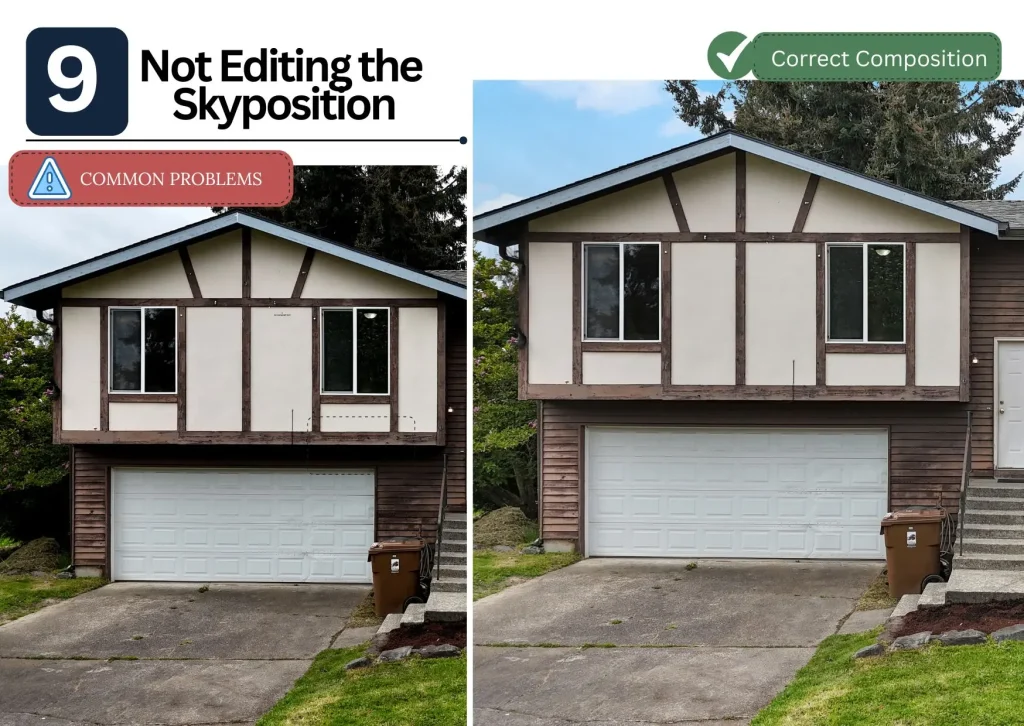
A dull white sky can make the entire property feel lifeless.
Why Sky Replacement Helps:
A clean blue sky creates warmth, brightness, and curb appeal.
Important:
Sky replacements should still look realistic and match the lighting conditions.
10. Forgetting Detail Shots
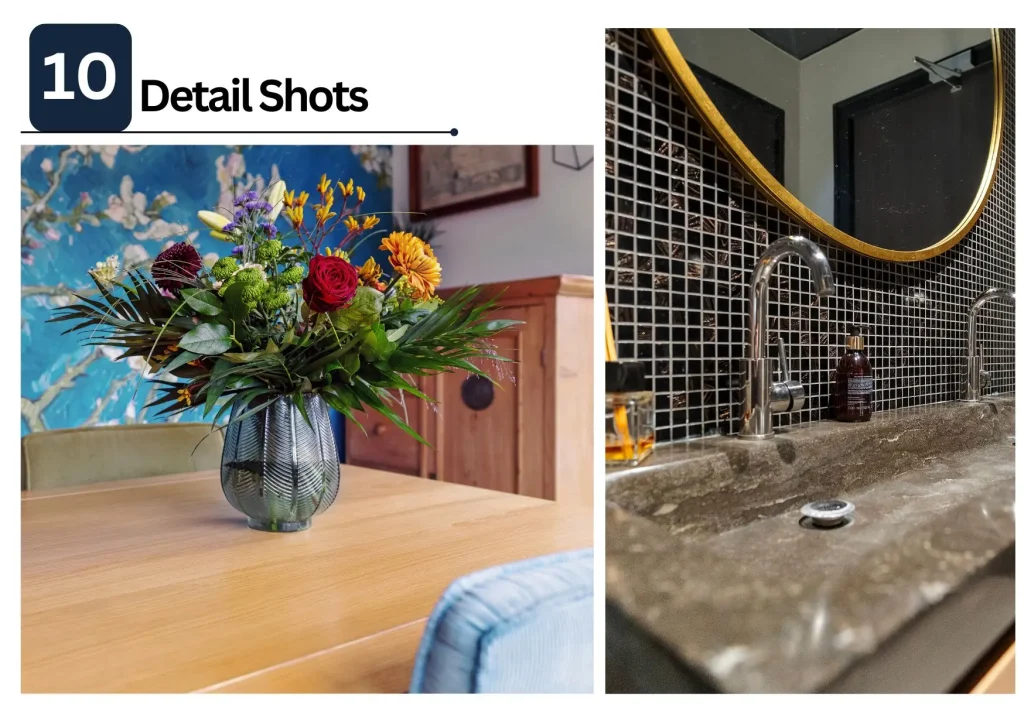
Many photographers focus only on wide room photos and forget important design details.
Important Details to Capture:
- Kitchen finishes
- Lighting fixtures
- Bathroom upgrades
- Fireplace areas
- Outdoor amenities
These images help create an emotional connection with potential buyers.
Final Thoughts
Real estate photography is not just about taking pictures — it’s about presenting a property in the best possible way. Small mistakes in lighting, editing, composition, or preparation can make an expensive property look cheap and unattractive.
Professional editing and careful photography techniques can dramatically improve listing quality, increase buyer interest, and help properties sell faster.
At TecPixel, we specialize in professional real estate photo editing services including HDR blending, flambient editing, object removal, sky replacement, virtual staging, and more to help photographers and agents create stunning property images.
If you want your listings to stand out, investing in professional real estate photo editing can make a huge difference.