HDR vs Flambient Real Estate Photography – Which Is Better for Real Estate Listings?

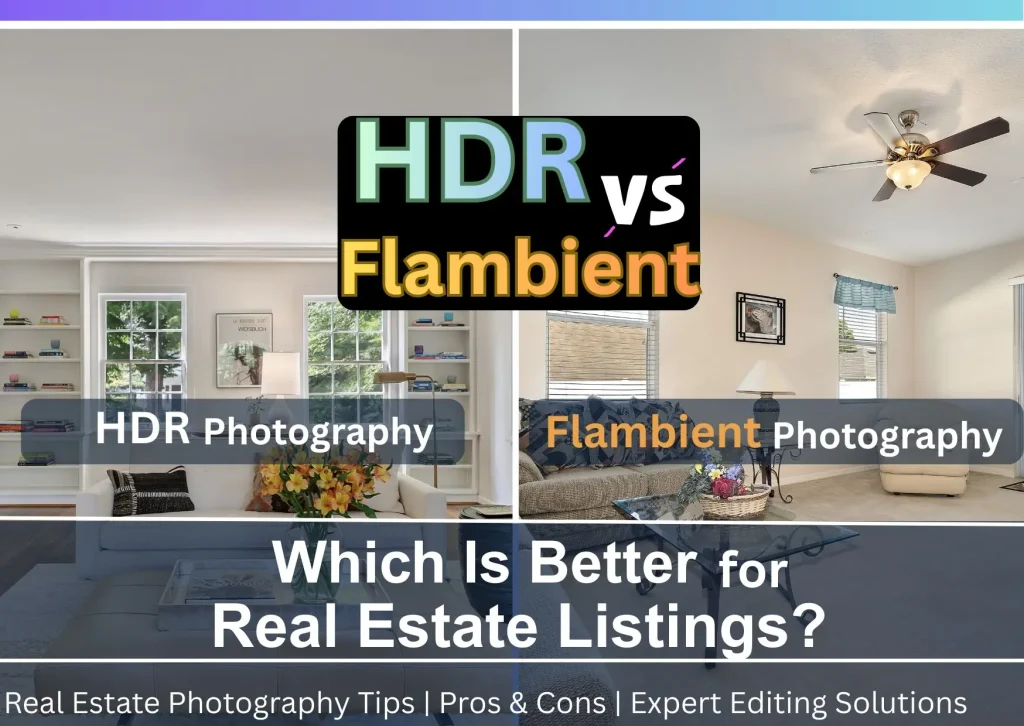
HDR vs Flambient real estate photography is one of the most common comparisons in the real estate photography industry. Photographers often debate which technique produces better listing images, more natural lighting, and stronger visual appeal for property marketing.
In today’s digital real estate market, property photos play a critical role in attracting buyers. Most homebuyers begin their search online, browsing listings and viewing photos before deciding whether to visit a property in person. According to research from National Association of Realtors, a large majority of buyers start their home search on the internet, making high-quality listing photos essential for successful property marketing.
However, photographing interiors is not always easy. Real estate photographers must deal with bright windows, dark corners, mixed indoor lighting, and reflective surfaces. Cameras cannot capture the full range of light that the human eye sees, which often results in photos that appear too dark, too bright, or unevenly lit.
To solve this challenge, photographers commonly use two popular techniques: HDR photography and flambient photography. Both methods aim to produce bright, balanced, and visually appealing images that showcase properties at their best.
But which method works better for real estate listings?
Let’s explore the differences between HDR vs Flambient real estate photography in detail.
What Is HDR Real Estate Photography?
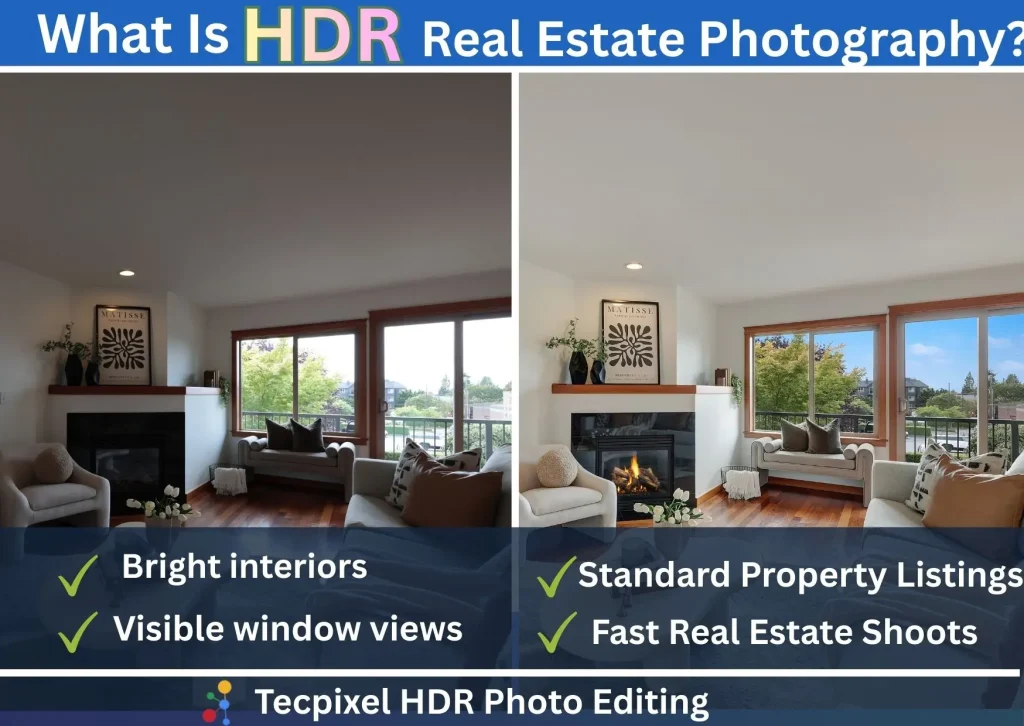
HDR stands for High Dynamic Range, and it is one of the most widely used techniques in real estate photography.
HDR photography involves capturing multiple exposures of the same scene and combining them during editing. This allows photographers to preserve details in both bright and dark areas of an image.
A typical HDR shot usually includes:
- A darker exposure to capture highlight details
- A normal exposure for balanced lighting
- A brighter exposure to reveal shadow details
These exposures are then blended together using editing software to create a balanced final image.
For example, when photographing a living room with large windows, a normal photo may cause the outdoor view to appear completely white. HDR blending helps preserve the window view while keeping the interior properly exposed.
This technique creates bright and balanced listing photos that work well for most residential properties.
Advantages of HDR Photography
HDR photography has become extremely popular among real estate photographers because of its efficiency and practicality.
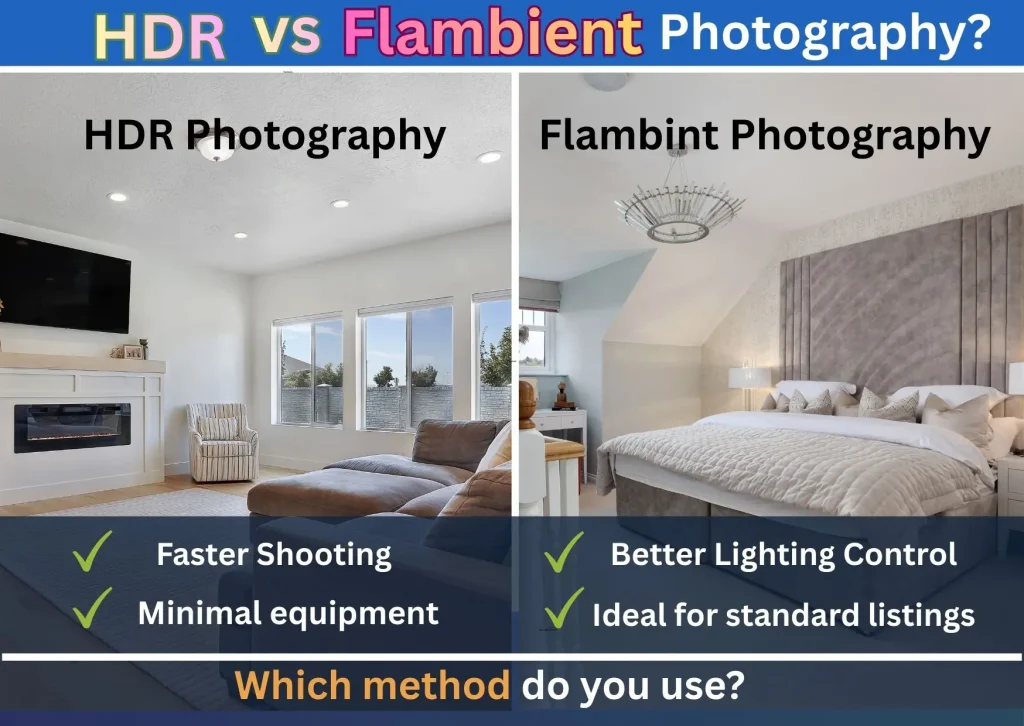
Faster Shooting Process
HDR photography is relatively quick. Photographers simply capture multiple exposures using a tripod and bracketed settings on their camera. This makes it ideal for photographers who shoot several homes in a single day.
Minimal Equipment
Unlike flash-based photography, HDR does not require additional lighting equipment. A camera, wide-angle lens, and tripod are usually enough to produce professional results.
Efficient Workflow
Because HDR is easier to capture, photographers can move through properties quickly and maintain a steady workflow.
Ideal for Standard Listings
HDR photography works well for most residential listings and is commonly used for properties in the mid-range market.
Limitations of HDR Photography
While HDR is efficient, it also has some drawbacks if not handled properly.
Artificial Colors
Poor HDR blending can create unnatural colors, especially on walls or furniture.
Halo Effects
Sometimes HDR images show halos around windows or bright areas due to incorrect blending.
Flat Lighting
Because HDR relies only on existing light, the final image may sometimes look flat or lack depth.
However, with professional editing, HDR images can still look natural and appealing.
What Is Flambient Photography?
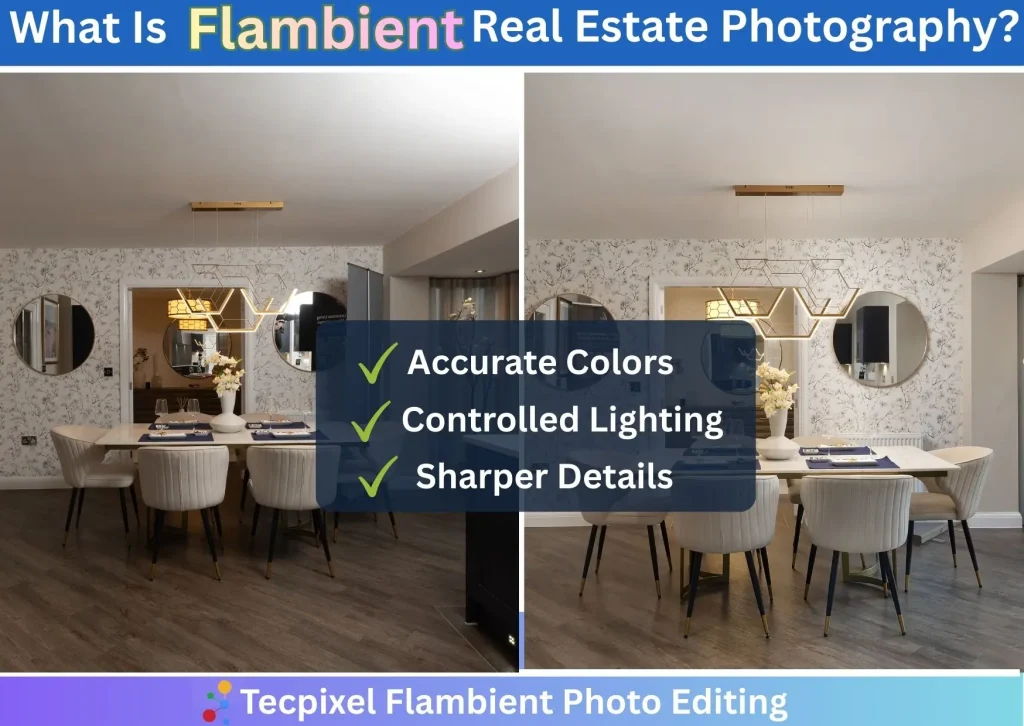
Flambient photography is another popular method used in real estate photography. The word “flambient” comes from combining flash and ambient light.
Instead of relying only on multiple exposures, photographers use flash lighting to control the brightness and color of a room.
In a typical flambient workflow, photographers capture two main types of photos:
- Ambient exposure – This captures natural light and existing interior lighting.
- Flash exposure – A flash unit illuminates the room to balance lighting and remove color casts.
These images are then blended together during editing to create a final photo that combines the best aspects of both exposures.
Advantages of Flambient Photography
Many professional photographers consider flambient photography to be the premium approach for real estate interiors.
Accurate Colors
Flash lighting helps remove unwanted color casts caused by indoor lighting, producing more natural and accurate colors.
Sharper Images
Flash light increases clarity and sharpness, allowing small details to stand out more clearly.
Better Lighting Control
Photographers can control how light spreads throughout the room, eliminating dark corners and uneven brightness.
Improved Window Views
Flambient photography often preserves outdoor scenery through windows better than HDR.
Because of these advantages, flambient photography is frequently used for luxury homes and high-end real estate marketing.
Limitations of Flambient Photography
Although flambient photography produces excellent results, it also has some challenges.
Slower Workflow
Setting up flash equipment and capturing additional exposures takes more time than HDR.
More Equipment Required
Photographers need flash units, triggers, and sometimes light stands.
Advanced Editing
Blending flash and ambient images requires more advanced editing techniques, usually done in professional software like Photoshop.
Because of this, flambient photography is often used for premium listings rather than high-volume shoots.
HDR vs Flambient – Key Differences
Both HDR and flambient photography aim to produce balanced real estate images, but they differ in workflow and results.
When comparing HDR vs Flambient real estate photography, photographers often choose based on workflow, lighting conditions, and listing requirements.
| Feature | HDR Photography | Flambient Photography |
|---|---|---|
| Shooting Speed | Fast | Slower |
| Equipment | Minimal | Flash equipment required |
| Editing | Moderate | Advanced |
| Color Accuracy | Good | Excellent |
| Lighting Control | Limited | High |
| Ideal For | Standard listings | Luxury listings |
Many photographers choose the technique that fits their workflow. Some even use both methods depending on the property type and client needs.
Why Editing Is Crucial in Real Estate Photography
Many professional editors specialize in HDR vs Flambient real estate photography editing to help photographers deliver consistent results.
Regardless of whether a photographer uses HDR or flambient photography, editing plays a major role in the final image quality.
Raw images from the camera often require adjustments such as:
- Exposure balancing
- Color correction
- Perspective correction
- Window view enhancement
- Sky replacement
- Detail sharpening
Professional editing ensures that images look clean, natural, and visually attractive, which helps listings stand out online.
How TecPixel Helps in HDR and Flambient Photography
Both HDR and flambient photography require careful editing to achieve clean, natural, and professional-looking real estate images. While photographers capture the exposures on-site, the final quality often depends on how well those images are blended and refined during editing. At TecPixel, we specialize in helping real estate photographers transform their HDR and With over 12 years of experience in real estate photo editing, our team understands the technical details required for both workflows.
HDR Photo Editing Support
For HDR photography, TecPixel carefully blends multiple exposures to create images that look natural and well-balanced. Our HDR editing process focuses on:
- Smooth exposure blending
- Natural color correction
- Balanced highlights and shadows
- Clean window views
- Perspective correction for straight vertical lines
This ensures that HDR images look professional, realistic, and ready for property listings.
Flambient Photo Blending
Flambient photography requires precise blending of flash and ambient images. Our editors combine these exposures carefully to preserve natural lighting while maintaining sharp detail and accurate colors.
Our flambient editing includes:
- Flash and ambient exposure blending
- Natural color balance
- Controlled lighting and shadow correction
- Window detail preservation
- Clean and polished final images
This process helps photographers deliver high-end real estate images with professional lighting and depth.
Supporting Photographers’ Workflow
By outsourcing HDR and flambient editing to TecPixel, photographers can:
- Save hours of editing time
- Deliver photos faster to clients
- Maintain consistent image quality
- Focus more on shooting and growing their business
Our goal is to support photographers by providing reliable editing that enhances their photography style and improves their workflow.
Final Thoughts
Both HDR and flambient photography have important roles in real estate photography. HDR offers a fast and efficient workflow that works well for most property listings. Flambient photography provides greater lighting control and premium image quality, making it ideal for luxury homes and high-end real estate marketing.
Ultimately, the best technique depends on the photographer’s workflow, equipment, and the level of quality required for the listing.
However, regardless of the method used, professional photo editing is the key to producing real estate images that attract buyers and help properties stand out in competitive markets.
When listings look bright, balanced, and professionally presented, they create stronger first impressions — and stronger first impressions lead to more buyer interest.